My big fat Greek love affair …

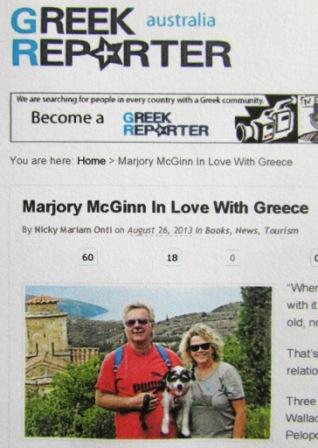
greekreporterarticle

LAST week started off quietly enough, writing a few stories to promote my book here and there; some social networking. But by Monday night all that had been swept away. I found myself in the centre of a mini media frenzy in Greece. As a journalist, I am used to being on the other side of the notebook, so this was something new.

It followed a recent interview I’d done with the editor of Australia’s esteemed  Greek newspaper Neos Kosmos about why I and my partner Jim, and our dog Wallace, went to live in the wild Mani region of Greece for three years during the economic crisis, which became the subject of my book, Things Can Only Get Feta.

I was sent a link on Monday to the published story in the Greek edition of the newspaper. But it wasn’t quite the story I’d expected. The Mani adventure was certainly there, but this had a different spin. Here was a story that exposed me irrevocably as a woman who has had a long love affair – with Greece. Outed!

I blushed as I read about “the unbelievable story” of my “erotic relationship” with the country, and that I had been “besotted with the place” from the first moment I had set foot on Greek soil as a youth.

All true, and the feature was written affectionately and without irony by Greek-Aussie editor Sotiris Hatzimanolis. I have indeed been in love with Greece all my life, from a fateful childhood friendship with a Greek girl called Anna in Australia, as a shy Scottish migrant, to my regular jaunts there ever since.

I didn’t think for a minute that Greeks would be moved by the passion of one foreigner for Greece. Boy, was I wrong, as the response to the story proved. Sotiris had known something about the Greek psyche at this moment in time that I didn’t.
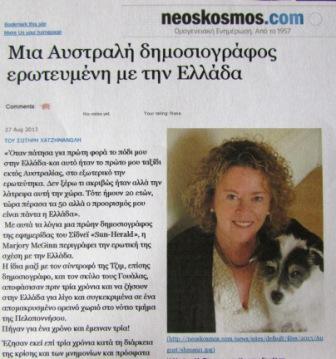
 

The article in Australia's Greek newspaper Neos Kosmos, with the headline "An Australian journalist in love with Greece".

The article in Australia’s Greek newspaper Neos Kosmos, with the headline “An Australian journalist in love with Greece”.


The Neos Kosmos piece was picked up quickly by an Athens press agency and sent out everywhere in Greece. By Monday evening it was on most internet news site and blogs – splashed with a similar headline “A Scottish journalist’s love affair with Greece”. One headline simply yelled, “Marjory McGinn in love with Greece”, like something you might have seen scrawled on the bike sheds in primary school.

The stories were sometimes revamped and occasionally in English, with a quaint Google-style translation. In one instance I was described as having “the most erotic relationship with Greece”, as if I’d just written a novel called Fifty Shades of Greece. I wish!

Greece and I do have a history, yet I have skirted around the issue of my affection for Greece most of my life because I’ve found that other people feel uncomfortable when you confess your love for a country, especially one that’s not yours.

By Tuesday, several Greek newspapers had contacted me for interviews and ran features in the following days, and one Athens TV station was keen for a live interview, but there were problems with the link-up and it’s still pending. Which is just as well. I think the Greeks have enough problems at present without having to listen to my less-than-perfect Greek.
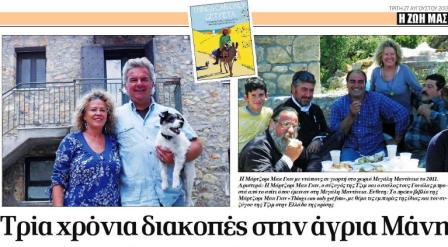
Another feature in Athens daily newspaper Dimokratia

Another feature in Athens daily newspaper Dimokratia


But this welcome publicity for the book isn’t the main point I want to make here.

The story Sotiris wrote had struck a chord with Greeks still suffering through the crisis, jaded and tired with their troubles. And the response to it was enormous. Our website, named in the stories, suddenly had 150,000 hits in three days – which crashed the site at one point. And there was a flood of emails, mostly from Greeks, with messages of thanks to an unknown foreigner for saying something nice about Greece for a change.

It made me realise how, over the past four years, there has been so little written about Greece that hasn’t been pessimistic, blaming, insulting at times.

Greeks have suffered critically during the crisis, as has been well documented already, but what I don’t think has been conveyed so accurately in the international media is how the crisis, and the effect of the austerity measures, has crippled their self-confidence as well as their standard of living. Many Greeks told us, when we were living in the Mani, they were ashamed of how low their country had sunk, even though it wasn’t all their fault.

So I want to share a few of those thoughts and wishes (both serious and light-hearted) from my recent correspondents (full names withheld). All the emails sent were sent in English.

“Thank you for being gracious toward Greece in these difficult times. We Greeks have been subjected to pure and evil racism because of the crisis, with an intensity that we never expected. In (some European countries),  patients in hospital have said they don’t want to be examined by Greek doctors just because they are Greek. Greeks have been bullied because of the usual stereotypes. Greece is not perfect and there are many things to be corrected, but it is very unfair for Greece to be demonized the world over.” – Stergios

“Your story has made me really happy. It is an inspiration to Greek readers who really need something like this right now.” – Kelly

“I felt proud and grateful when I read about you and your love for Hellas (Greece). I would like to thank you for coming to my country and wishing that Greeks would love this country as much as you have.” – Giorgos

 “Any anthropos (person) who falls in love with this place isn’t (doing it) by accident. For your information, Hellas (Greece) loves you back. We are living the economic nightmare here that those who would call themselves “human” have played out on us. I know we will win as long as we are together and help each other.” – Stephanos (Greek American living in Greece)

“I am so proud that you would visit my country, my people, my beloved places. Thank you so much for what you have done for us. I want you to come here again to love us more, to feel the Greek hospitality.” – Olga

From a woman who thought we were still in the Mani: “We will be beside you and protect you as guests. Greek hospitality is great to those who respect us. Our country is your country.”

And lastly, a comment sent to my Facebook page from Kyriacos: “Way to go, Marj! You are a pure Hellenic lady. Be well.”

So, what’s not to love about Greece and its warm-hearted people? Here’s my similar wish for the country. Be well! Or, as they say in Greek, na eiste kala.

For details about the book visit www.bigfatgreekodyssey.com and www.facebook.com/ThingsCanOnlyGetFeta

Visit Amazon to buy the book (Kindle version – new edition). A new edition of the paperback will also be available shortly.

Protected by Copyscape Web Copyright Protection

© Text and photographs copyright of the authors 2013

To leave a comment please click on the comment link below


Facebooktwitterredditpinterestlinkedinmail
Please share this post

Southern Peloponnese is the star attraction

OLYMPUS DIGITAL CAMERA

Stoupa beach in the Mani

THE Hollywood movie Before Midnight is now doing the rounds with mixed reviews, but one aspect is indisputable – the real star of the piece is the southern Peloponnese.

Focus on this wonderful region of Greece has been long overdue. Having spent three years living in the Mani region (situated in the middle of the three peninsulas), I can vouch for its beauty and real authenticity.

From my experience there, I have drawn up a list of some favourite places to visit, mostly in the Mani. The recommendations for tavernas and other businesses are based on my personal taste alone. Come to the region one day so you can draw up your own list of favourites.

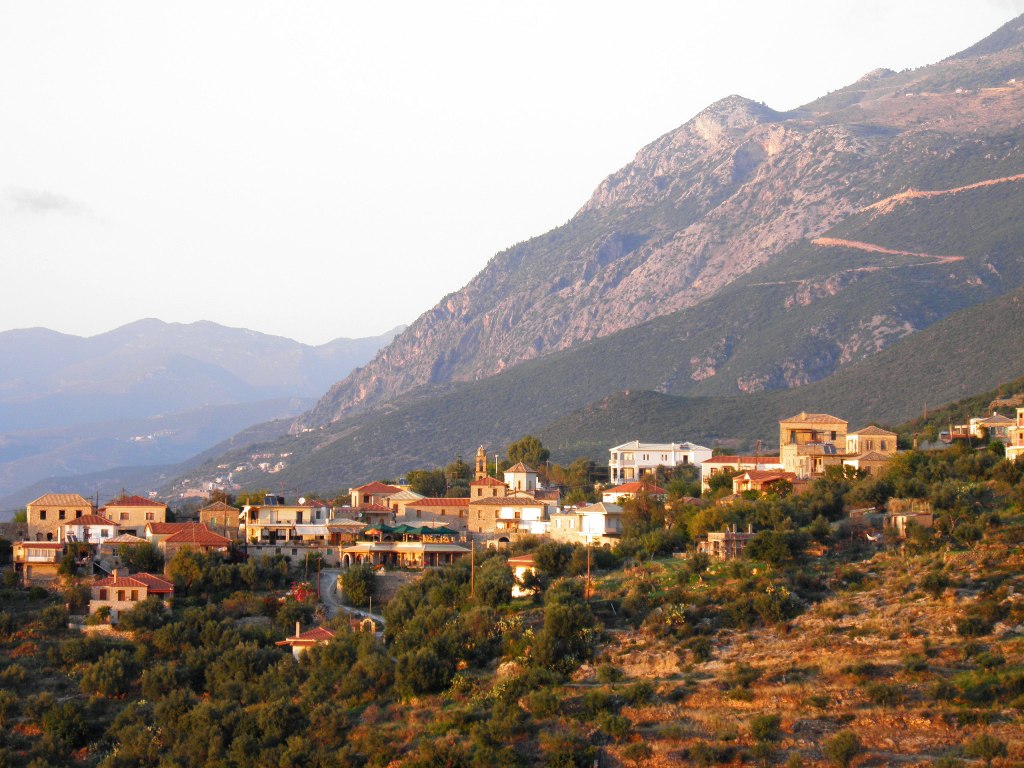
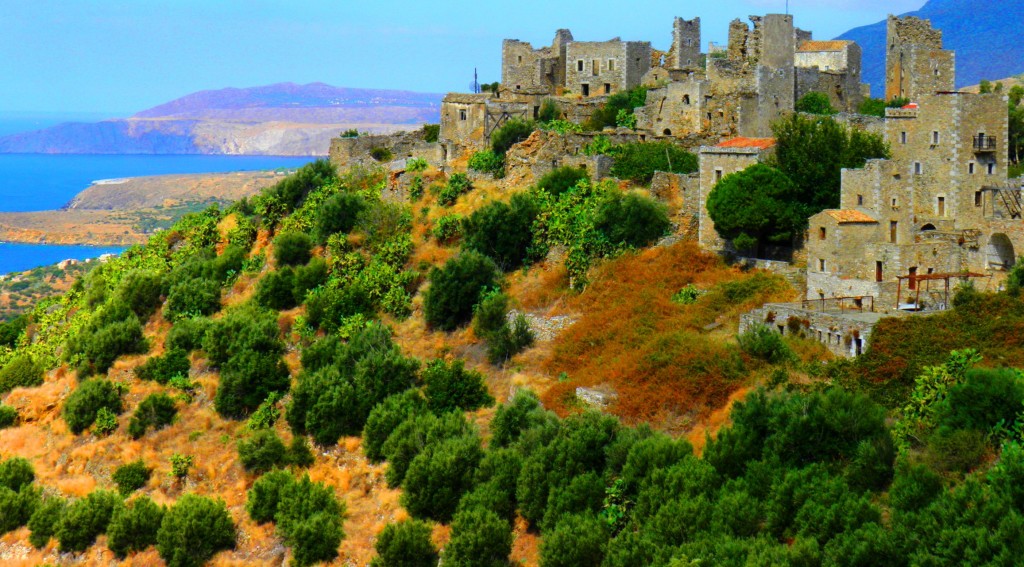
Hillside village of Megali Mantineia

Hillside village of Megali Mantineia

* BEST HILL VILLAGE: Megali Mantineia, in north Mani.

There are many lovely rural villages in the southern Peloponnese but this is my favourite, partly because my partner Jim and I, and our mad Jack Russell dog Wallace, spent the first year of our Greek adventure here and it was the inspiration for my book Things Can Only Get Feta. It’s a short drive from popular Santova beach and nestles on a quiet hillside beneath the north Taygetos Mountains. It’s an unspoilt village with a tight-knit community where most people work as goat farmers or harvest olives.

Unusually for a rural village, there are four very good family-run tavernas here offering traditional dishes. The Lofos (27210 58630), with its vast terrace overlooking the Messinian gulf is on the drive up from the sea; Iliovasilema, or more commonly called Yioryia’s after the owner’s wife (27210 58660), and nearby Sotiris Taverna (27210 58191); Anavriti Taverna (27210 58062), behind the main church, and the Kali Kardia kafeneion in the heart of the village (27210 58306).

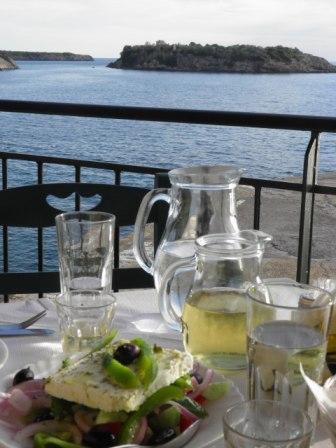
Dining experience in Kardamili

Dining experience in Kardamili

*  BEST COASTAL VILLAGE:  Kardamili

Kardamili is an hour’s drive from Kalamata and is the village where some of Before Midnight was filmed. It has a nice old harbour and pebble beaches. The Taygetos mountains form a picturesque backdrop and there is an historic area with traditional Maniot tower houses. From the village are good walking tracks up to the villages behind, like Agia Sophia and Petrovouni. The late Patrick Leigh Fermor’s house is situated at the southern end beside Kalamitsi beach, with excellent swimming and snorkelling.

Favourite walk: from the old town up to Agia Sophia. Favourite taverna: Hariloas (27210 73373), by the harbour, for its charming owner Maria, and the food, of course. Try the doorstep-sized moussaka, always freshly baked.

Favourite shop: The Bead Shop on the main street of Kardamili (693 9455 365), run by Gill Rochelle. This is a treasure trove of unusual handmade jewellery and a trillion fab beads if you want to get creative while on holiday and make your own. Gill is also very knowledgeable about this area.

 Kalogria beach with the house of George Zorbas

Kalogria beach with the house of George Zorbas

* BEST LITERARY CONNECTION: Kalogria beach

 Ten minutes further south from Kardamili is the sheltered sandy cove where much of the book Zorba the Greek was conceptualised. Greek writer Nikos Kazantzakis spent some time here with the real George Zorbas when they were running a lignite mine nearby (see earlier blog post in November for more details). The beach here, where the writer lived in a wooden hut, now demolished, was also the inspiration for the scene in the book where Zorba teaches the narrator to dance the sirtaki. Stoupa is a close second, a long sandy beach nearby with a good selection of tavernas.

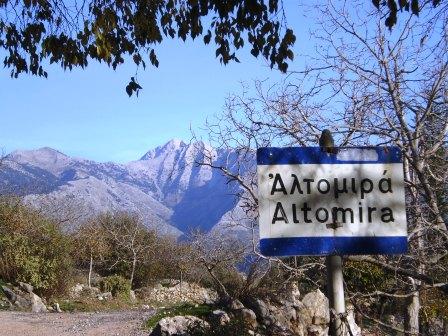
Altomira village in the Taygetos mountains

Altomira village in the Taygetos mountains

* BEST LOFTY VILLAGE: Altomira

This is a fabulous village in north Mani at nearly 3,000 ft with a stunning view towards Profitis Ilias, the highest peak in the Taygetos range. The village is partially in ruins, though many Greeks are buying houses and renovating them for summer holidays. The best approach is from the main Kalamata to Stoupa road with the turn-off to Sotirianika, and a 4×4 is recommended.

If you’re a fit, keen walker, there is an old stone kalderimi (donkey track), called the Biliova, from Sotirianika up the side of a hill that will lead you to the village, with great views. You will need to get hold of a local walking map.


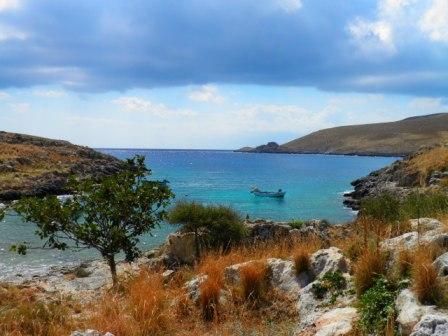
Near the Cave of Hades, Cape Tainaron

Near the Cave of Hades, Cape Tainaron

* BEST SPOOKY SITE: The Cave of Hades

This is situated on Cape Tainaron at the tip of the Mani peninsula. From the end of the road, at the car park, you take the path down to a nearby cove and the cave is behind a high rocky outcrop, covered by bushes. This is the doorway to the Underworld mentioned by ancient writers and scholars. The place where Hercules performed his 12th labour, dragging out the three-headed dog Cerberus.  From here there is a path to some ancient Roman ruins with mosaics and further on is the lighthouse on the southernmost point of Greece. 

Favourite taverna: This is on the road down to the fascinating town of Areopolis, and the Cape, at wide Limeni Bay near Otylo. Takis Taverna (27330 51327) is right by the water where fishing boats pull in and land the day’s catch.

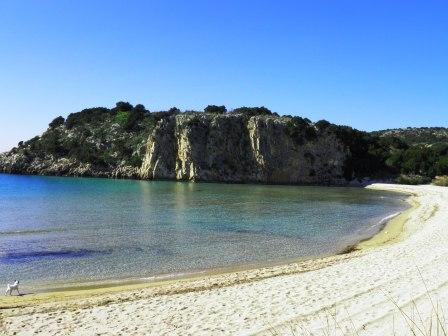
Stunning Voidokoilia beach

Stunning Voidokoilia beach

* BEST BEACH: Voidokoilia

Apart from the long peaceful Santova beach in the Mani, the most perfect, photogenic beach is Voidokoilia, near Navarino Bay on the Messinian peninsula (left-hand prong). Shaped like the Greek letter omega Ω, it has two headlands, one with a ruined Frankish castle on top. The sand here is soft and the water pale and silky. There is nothing much here apart from the beach, so head back towards Pylos town to the fishing village of Yialova with its own sandy beach and a row of nice tavernas and cafes by the water.


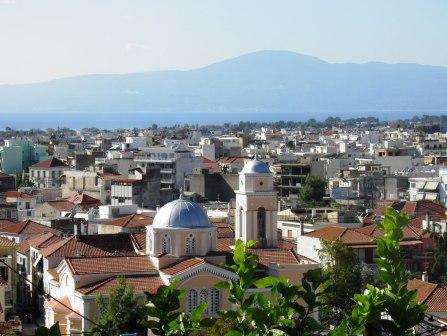
View across Kalamata city centre

View across Kalamata city centre

* BEST CITY: Kalamata

Okay, it’s the only city of the southern Peloponnese, but as Greek cities go, this one is very appealing. Set at the head of the Messinian Gulf, it has the lot: a long clean city beach; history (the historic centre, Frankish castle, cathedral and archaeological museum); a vibrant café scene along Navarino Street; a bustling marina with a selection of tavernas.

Favourite tavernas: Koilakos for fish, especially calamari and grilled octopus, Navarinou St, 12,  (27210 22016); the Argo, Salaminos St 52, (27210 25380). Favourite dish, grilled sardines. The other dish is the lovely Adonis, a very entertaining waiter, and a city celebrity. Ta Rolla, Sparta St, 53 (27210 26218). An old-style taverna in the market area of the city with wine barrels full of a lovely local brew and specialties like bean soup and stuffed tomatoes.

Best monastery/silk workshop in Kalamata:

Head to the 18th century Kalograion (Nuns’) Monastery in Mystra Street (near the Ypapanti Cathedral). Once internationally famous for its silk products, made at the monastery by the nuns, it still produces many lovely items in-house though the nuns number only a couple of dozen these days.  The shop here stocks unique hand-printed scarves, embroideries, as well as small icons and religious books.

This is an oasis of calm in the city with a courtyard shaded by orange trees and two small churches. Later, head to the Ypapanti Cathedral to see the ‘miraculous’ icon of the Panagia (Virgin Mary) saved from a fire in the 19th century during a skirmish with the Turks, and the patroness of this city.

Other places to visit in the southern Peloponnese: the archaeological site of Ancient Messene, north-west of Kalamata, close to the village of Mavromati; Nestor’s Palace, one of the finest Mycenaean sites in southern Greece, near Pylos. The twin “eyes of the Venetian empire” Koroni and sprawling Methoni castles at the tip of the Messinian peninsula; lastly, Monemvasia, Greece’s “rock of Gibraltar” in the Laconian peninsula.

For more information about what to see and do in the southern Peloponnese go to our home page on www.bigfatgreekodyssey.com or visit www.mythicalpeloponnese.gr run by the Greek National Tourist Board. A great site for walking tracks in the Mani and other information: www.insidemani.gr


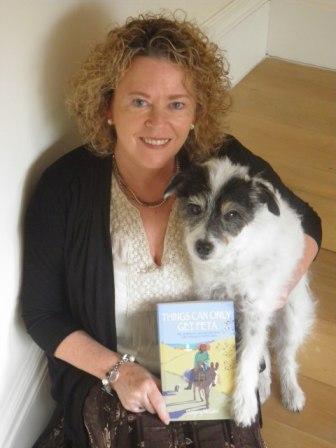
Marjory and Wallace with the new book

Marjory and Wallace with the new book

A book about living in Greece

For more details about my book, Things Can Only Get Feta (Bene Factum Publishing, London) based on three years living in the Mani, southern Greece during the crisis, visit my website www.bigfatgreekodyssey.com or visit Facebook www.facebook.com/ThingsCanOnlyGetFeta

Visit Amazon to buy the book (Kindle version – new edition). A new edition of the paperback will also be available shortly.

To read my recent story in The Scotsman newspaper about the southern Peloponnese please click on the following link: http://www.scotsman.com/lifestyle/features/travel-mani-delights-in-greece-1-2976801

If you are a resident or frequent visitor to the southern Peloponnese please share your favourite place and tell me what it means to you. Click on ‘comments’ link below

Protected by Copyscape Web Copyright Protection

© Text and photographs copyright of the authors 2013

To leave a comment please click on the comment link below

Facebooktwitterredditpinterestlinkedinmail
Please share this post

Things can only get feta …

CAN you have an adventure in crisis-torn Greece and not come unstuck? Can you take a mad Jack Russell dog to a rural region and not create havoc? Can you ever feel like more than an outsider in a mountain village that has changed little over the centuries?

You might find the answers to these questions, and hopefully have a giggle along the way,  in the book based on my first year in the Mani, in the southern Peloponnese, due to be published in July this year. It’s called Things Can Only Get Feta (Two journalists and their crazy dog living through the Greek crisis) by Marjory McGinn.

In the first year of the big fat Greek adventure, along with my partner Jim (which I started writing about in this blog in 2010), we had such an amazing time, having travelled extensively through this beautiful region, and having befriended some wonderful local characters, that I wanted to shape it into a book so that other adventurers/armchair travellers could get a feel for this unique rural way of life.


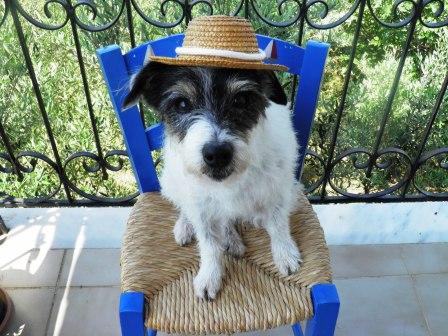
Chairman: Wallace soaking up the sun in the Mani

Chairman: Wallace sunbakes in the Mani


I was encouraged by many of the regular blog readers who wrote to the website saying how much they enjoyed our mad meanderings in Greece, especially with naughty Wallace the Jack Russell in tow. A big thanks for that and I hope you enjoy the book.

For an outline of the book and details of how to pre-order it, click on this link to take you to the home page of our website: http://www.bigfatgreekodyssey.com

Visit Amazon to buy the book (Kindle version – new edition). A new edition of the paperback will also be available shortly.


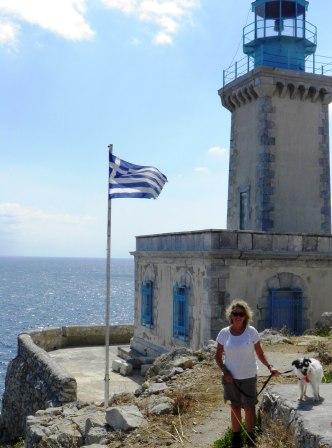
Land's end: Marjory and Wallace at the southernmost point of the Mani peninsula

Land’s end: Marjory and Wallace at the southernmost point of the Mani peninsula


Looking back

When we set off in early 2010, it was supposed to be for a year’s adventure only. We aimed to live in the Mani region (middle peninsula of the southern Peloponnese), but we had no idea of the exact location, or what our life would be like, or even if we would find a suitable place to live, especially in the midst of an economic crisis. But that’s the whole point of adventure – stepping right into the unknown and taking whatever comes your way.

The village we ended up in surpassed all our expectations, particularly with regard to the location and the wonderful local characters we met, some colourful British expats, and the mad escapades that would unfold. But other things were difficult, as we outlined in the blog: dealing with Greek bureaucracy, buying a Greek car, surviving the first scorching summer, dealing with alien wildlife (the critters, not the expats) – scorpions, polecats, snakes, hornets.

Then there was the problem of getting a tiny Greek village with typical zero-tolerance of ‘pet’ dogs to accept the crazy, barky, territorial Wallace. Many villagers had never seen a Jack Russell dog before and to their mind, he just looked like a small mutant sheep. To find out how Wallace’s immersion into Greek life panned out, you’ll have to read the book.


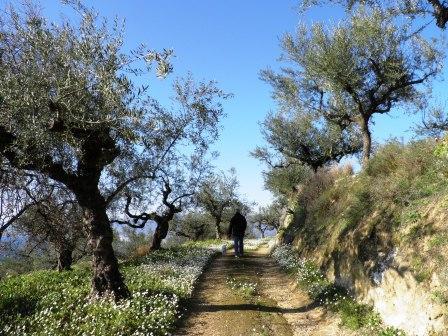
Branching out: Jim and Wallace enjoying the lush olive orchards in the spring

Branching out: Jim and Wallace enjoying the lush olive orchards in the spring


One year’s adventure turned into another and in the end we stayed almost three years in the southern Peloponnese, having loved every mad and magical moment. Then there was the Greek crisis, of course. I commented on this in the blog along the way and we did see some massive changes over the three years, particularly in the city of Kalamata where shop closures and business failures were a daily occurrence.

The austerity measures affected everyone in the region, sometimes tragically so, but one thing that never changed was the stoicism of Greek people and their enduring spirit particularly in the face of often spiteful criticism by the international media. Stories from outside the country that depicted Greeks as ‘lazy’ and ‘work-shy’ were not helpful, and yet anyone who has lived in the country will know just how hard most ordinary Greeks do work and strive for a better life, with no state handouts.


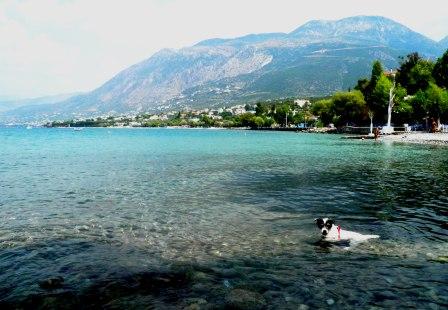
Water baby: Wallace swimming in a cove in the shadow of the Taygetos mountains

Water baby: Wallace swimming in a cove in the shadow of the Taygetos mountains


In our three years, we travelled the whole of the southern Peloponnese, through the Mani, Laconia and the Messinian peninsula, much of which we have already written about and many places we haven’t got round to writing about yet. I will post some short blogs on these, with photos, over the coming months, and general thoughts about Greek life, as we found it. So please keep reading, and your feedback, as always, is appreciated.

We are currently back in Britain for the time being but are keeping close ties with Greece and look forward to our next big fat adventure there.

Best wishes for a happy summer.


Protected by Copyscape Web Copyright Protection

© Text and photographs copyright of the authors 2013

To leave a comment please click on the comment link below

Facebooktwitterredditpinterestlinkedinmail
Please share this post

Finding the real Zorba in the Mani …


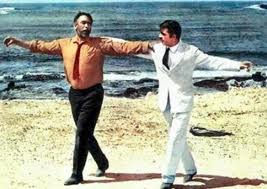
Anthony Quinn as Zorba, with Alan Bates, dancing the sirtaki in the 1964 movie


APART from the Parthenon, Nana Mouskouri and blue-domed churches, what image or event totally captures the essence of Greece? For me, it’s the cinematic images of Zorba, played by Anthony Quinn, dancing the sirtaki on the beach to the Mikis Theodorakis’s theme tune – Zorba the Greek. The outrageous, lovably raffish Zorba is the enduring symbol of the nation’s spirit and stoicism. It’s no accident that during the international campaign earlier this year called We Are All Greeks, sympathisers world-wide took to city streets, linked arms and danced the sirtaki in support of Greece.

The character of Alexis Zorbas that Nikos Kazantzakis created 60 years ago in his book The Life and Times of Alexis Zorbas (translated into English as Zorba the Greek)  is more than just a literary concoction, however. The real man behind the character was every bit as spirited. Legendary tales about him are kept alive today in an unspoilt corner of the Mani region in the southern Peloponnese.

It was here that Cretan-born Kazantzakis hooked up with Yiorgis (George) Zorbas in 1917 for a peculiar and risky venture in lignite mining that was doomed to failure for many reasons but was nevertheless spun into literary gold a few decades later.


The original small white house at the end of Kalogria beach rented by George Zorbas from a local family


To find out more about the real Zorbas, we set off for the secluded beach of Kalogria, near the village of Stoupa, to meet a young woman called Mary Georgilea, whose family have been closely associated with the Zorbas family for several generations.

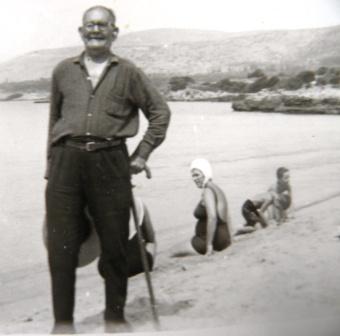
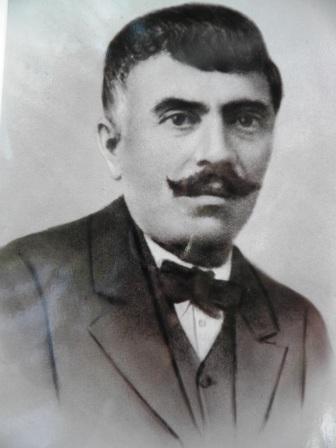
She took us to the small renovated house on the beach, built in the late 19th century by her great–grandfather Andreas Exarchouleas (pictured below) and rented out to George Zorbas when he first came to the Mani to be foreman of the Prastovas mine on a nearby hillside where Kazantzakis had become one of the partners in this venture. This was a time when the Greek government was offering incentives to mine lignite, a precious commodity in the war years.

The beach of Kalogria these days, out of season, is almost as deserted and peaceful as it was when the pair first came here in 1917. The small house with a red pitched roof is one of a pair built on the far right of the beach, not far from the well-known natural spring, the Prinkipa, that bubbles up cold mountain water between the rocks, like a natural plunge pool.


Mary Georgilea in front of Kalogria beach. Her great-grandfather Andreas Exarchouleas (below) rented out the white house to George Zorbas (bottom)


Kazantzakis had chosen to live on the other side of this quiet sandy cove from Zorbas in a simple hut made of wood and bamboo with nothing much inside but a table, chair and a straw-filled mattress. Yet it was here he spent much of 1917/18 writing and reading, leaving the gregarious Zorbas to deal with the lignite business, and village life.

Born in west Macedonia in 1867, Zorbas had worked in various countries as a miner before he came to the Mani, bringing his wife and some of their eight children with him, though they preferred to stay well away, living in the nearby city of Kalamata.

After working hours, Zorbas, then in his fifties, and Kazantzakis, in his thirties, regularly decamped to the shoreline of Kalogria with their supper – often cooked for them by a member of Andreas Exarchouleas’s family – for a long party session, either alone or with whoever had dropped by for the evening, over a few carafes of local wine, and Zorbas would play his bouzouki and sing. In real life, George Zorbas played the bouzouki, not the santouri, as in the book. The pair were famous locally for their rowdy beach soirees, in which they frequently danced along the shoreline, a fact that was immortalised in Kazantzakis’ book.


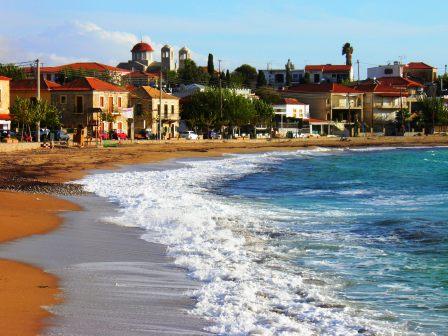
Stoupa beach, once a tiny fishing village, is now a popular tourist destination in the Mani


Mary, who lives in the nearby village of Stoupa and runs a villa rental business with her mother, was brought up hearing many outlandish stories about Zorbas from her grandfather, Yiorgos Exharchouleas, a well-known local resident. She says Zorbas was a unique character and faithfully captured in Kazantzakis’ book.

She also says that Zorbas and the writer more or less took over Kalogria beach in 1917 and scandalised and delighted Stoupa with their bohemian lifestyle. Stoupa in those days was a small, conservative fishing village with a few tavernas along the seashore and had seen nothing like this pair of outsiders, or their visiting friends – a  cast of exotic international characters who descended on Kalogria beach and included famous Greek actors, intellectuals and one of Kazantzakis’ best friends, the poet Angelos Sikelianos.

But while Kazantzakis was a more reclusive and complex character, the locals instantly took to Zorbas’ antics, his bouzouki playing, his kefi (high spirits). Kazantzakis, as in the book, was the total opposite of Zorbas, the cultivated aesthete compared to the rough and ready miner. It was the most unlikely of friendships, yet Kazantzakis has written many times of his admiration and brotherly love for Zorbas.

In another of his books, the autobiographical, Report to Greco, Kazantzakis explains what Zorbas meant to him.

“For he had just what a quill-driver needs for deliverance: the primordial glance which seizes its nourishment arrow-like from on high; the creative artlessness, renewed each morning, which enabled him to see all things constantly as though for the first time, and to bequeath virginity to the eternal quotidian elements of air, ocean fire, woman, and bread; the sureness of hand, freshness of heart, the gallant daring to tease his own soul, as if inside him he had a force superior to the soul…”

To complete the search for the real Zorbas, Maria took us to the abandoned Prastovas area on a Stoupa hillside which has the original lignite mine the pair were involved in. The mine proved unsuccessful and had an early demise and now it is a rather wild and forlorn rabbit warren of tunnels oozing puddles of spring water.

The work at the mine had been hard and dangerous with around 200 workers employed in 1917, some of whom later remarked that while Zorbas was always there working like a mule, Kazantzakis was rarely ever seen, even in the stone ‘office’, that is now a dilapidated old house. He preferred to keep a quiet vigil at the beach hut at Kalogria.

Some of the local Greeks we spoke to about the legendary George Zorbas lamented the disappearance of great characters like him and say the economic crisis has cut the Greek hero down to size. But if ever Greece needed another unique, maverick soul like Zorbas – it’s definitely right now.


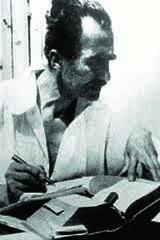
Nikos Kazantzakis wrote in Report to Greco of his great admiration for the inimitable George Zorbas


Report to Greco by Nikos Kazantzakis (Faber and Faber) translated by PA Bien.

A book about living in Greece

For more details about my book, Things Can Only Get Feta based on three years living in the Mani, southern Greece during the crisis, visit my website www.bigfatgreekodyssey.com or visit Facebook www.facebook.com/ThingsCanOnlyGetFeta

Visit Amazon to buy the book 

For more information about the southern Peloponnese www.bigfatgreekodyssey.com

To leave a message, click on the link below.

Thanks for calling by.
Protected by Copyscape Web Copyright Protection

© Text and photographs copyright of the authors 2012


Facebooktwitterredditpinterestlinkedinmail
Please share this post

When will Greece be loved?


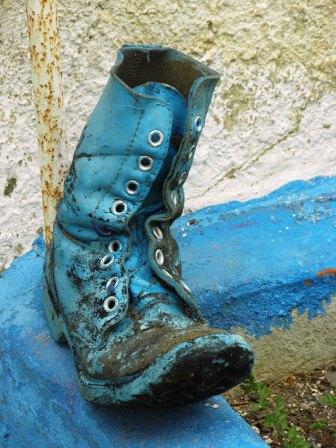
Putting the boot in: Greece doesn’t deserve to be bullied by its euro neighbours


IN the lead-up to the recent Greek elections (one and two), much of the world’s media had a great old time knocking the Greek character, having a laugh about tax dodgers and work-shy citizens. But if the rest of the world thinks that level of criticism will pulverise the Greeks, they’re wrong. Greeks created the word stoical – and they are its best practitioners.

At Kalamata Airport recently, while waiting for two Aussie friends to arrive from Athens, we overheard a tourist (northern European) having a strop with a young Greek guy at a car hire counter. The tourist was late returning his car and was anxious that he’d be charged for an extra day. The Greek guy assured him it was okay, he’d make a note on his form and make sure the visitor wasn’t charged an extra fee. But the visitor still wasn’t happy. As the Greek guy was writing his note, Mr Stroppy started up again, demanding that the guy sign the note on the form and also demanded to see his identity card as well.

The Greek guy was surprised but gracious. He said he wasn’t obliged to show his ID to a customer but took it out anyway to calm the tourist down. But STILL it wasn’t enough. “Write down your card identity number as well,” said Mr Stroppy, jabbing his finger at the form.

The Greek guy finally had enough (as had the rest of us in the car hire queue) and refused, putting his card back firmly back in his pocket, leaving Mr Stroppy to steam away at the counter. I wanted to cheer, but thought better of it.

Yet Mr Stroppy had to have the last angry word. “You know what, you have a lovely country here but you are all totally disorganised. It’s a disgrace,” he said.

The Greek guy just looked at him, shrugged stoically and got on with his work. I’m sure he’s seen worse, heard worse and has more to worry about than a pompous foreigner trying to kick major ass over a hire car.

A Greek acquaintance here who owns holiday villas in the Mani told us that a group of Germans cancelled their holiday a couple of months back because they feared they would get beaten up by Greeks while here because of recent harsh measures demanded by the Troika, and particularly by Germany. When we heard this story we thought it was both sad and ludicrous, that tourists are so uninformed and paranoid about coming to Greece. Get real! From our recent experience at the airport it seems to me that Greeks are more in danger of being beaten up by the visitors.

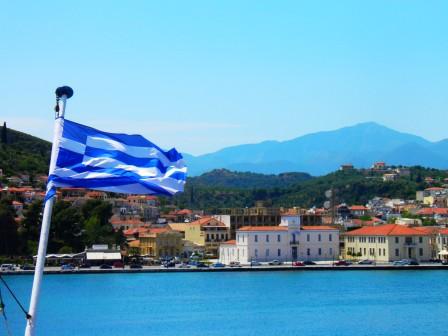
Flying the flag: OK, Greece isn’t quite like northern Europe – but that’s why we love it

Greeks bearing laptops

THE fact that Greece might be disorganised is completely unfounded. Sure, the country’s politicians faff about a lot and keep doing policy U-turns, but other services here, both private and government, run remarkably smoothly. We took our newly arrived Aussie friends to the telecommunications firm Vodafone in Kalamata to sort out mobile internet connections for their laptops, since they like to keep in touch with the outside world while on holiday.

When the guys at the Vodafone office tried to fit the USB modems they found they weren’t compatible with the couple’s very new computers. The guys would have to talk to techie colleagues in Athens so they could download software to fix the problem. It was all handled calmly and graciously, without any of the frowning or moaning you might expect elsewhere.

While the Vodafone guys were working on the couple’s computers they told us all to go for a coffee nearby, which we did in a favourite venue (Le Garcon on Aristomenous St), which is an oasis of serenity and coolness on a hot day (the temperature was around 38 degrees) as the outside seating area has overhead sprinklers delivering a continuous fine mist of icy water.

Half-an-hour later, we were amazed to see the two Vodafone technicians sprinting around the corner to our table, each holding aloft an opened laptop, much to the amusement of the other café punters. The techie guys needed our friends’ passwords in order to proceed. That was sorted, and off they sprinted again.

Our friends were gobsmacked. “That would never happen in Oz,” they said.

“Not in the UK either,” we added.

We well remember it once took us a month to get a broadband connection in Scotland with a well-known internet provider when we moved house. The corporate bumbling was immense, and so was the aggravation of having to ring an Indian call centre every other night to listen to the same old comedy routine of excuses and then promises of broadband by morning, which never happened. And so it went on. In Greece they don’t outsource to overseas call centres.

Hummus and hospitality

IT’S always gratifying to see Greece through fresh eyes. Our Aussie friends have been overjoyed by their stay in this region of the Peloponnese and only dismayed at the level of misinformation filtering around the world about Greeks. They have found good service and efficiency everywhere they’ve been.

And they are delighted that the old standards of Greek hospitality and kindness have not diminished despite the economic crisis. The couple are staying in an apartment in the Mani and every day their Greek neighbours have brought produce from their garden – fat, juicy tomatoes and cucumbers – and home-baked bread, olives, oil and much more.

Attention all moaning minnies from overseas. If you can’t be open-minded and generous towards Greece during its crisis, go somewhere else. Simple. I hear the Norwegian fjords are pristine and cool this time of year. Canoes are plentiful…

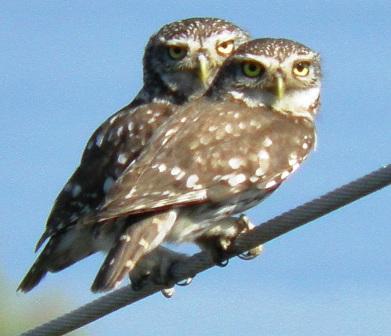
Birds on a wire: Our garden owls snuggle up side by side …


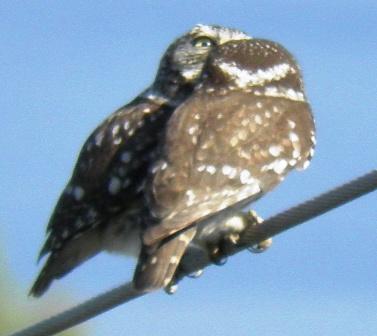
… and have a hoot with some amorous activity

Well owl be damned …

WE have said a lot lately about our little brown owl visitor. Indulge us, we’re new to twitching. We have found out the Greek brown owl is partly diurnal, which is why it appears on our power lines night and day. We started out with one, but now we regularly see a couple sitting on the power lines, sometimes smooching. We’ve had trouble getting a good picture of them. But now we have several, which we wanted to share. We promise to only mention the owls again if they are joined by their extended family … or develop some interesting high-wire routines.

To leave a comment about the blog, please click on our website link http://www.bigfatgreekodyssey.com/Contact-Us.php

© Copyright of the authors 2012


Related Posts Plugin for WordPress, Blogger...Facebooktwitterredditpinterestlinkedinmail
Please share this post